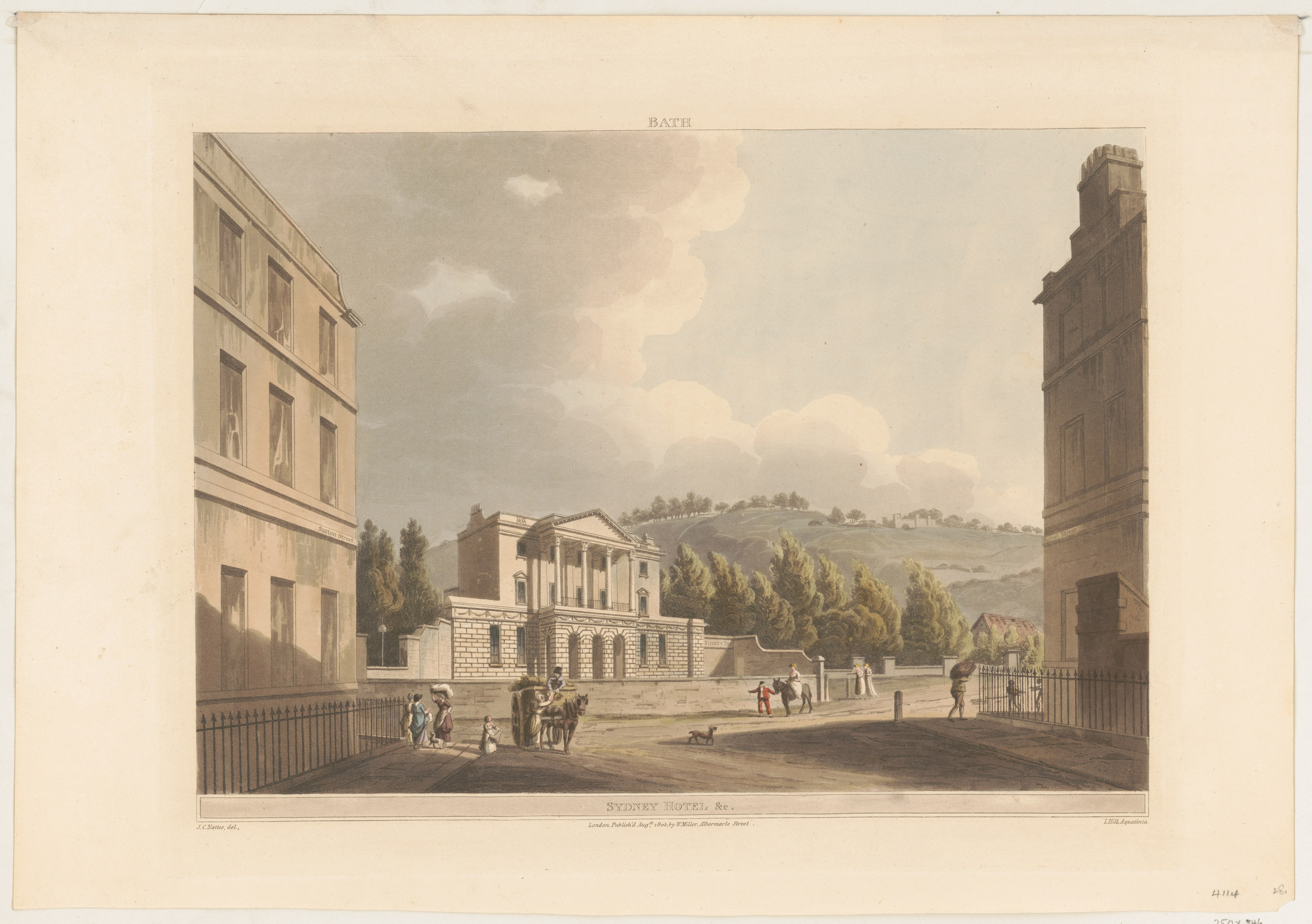
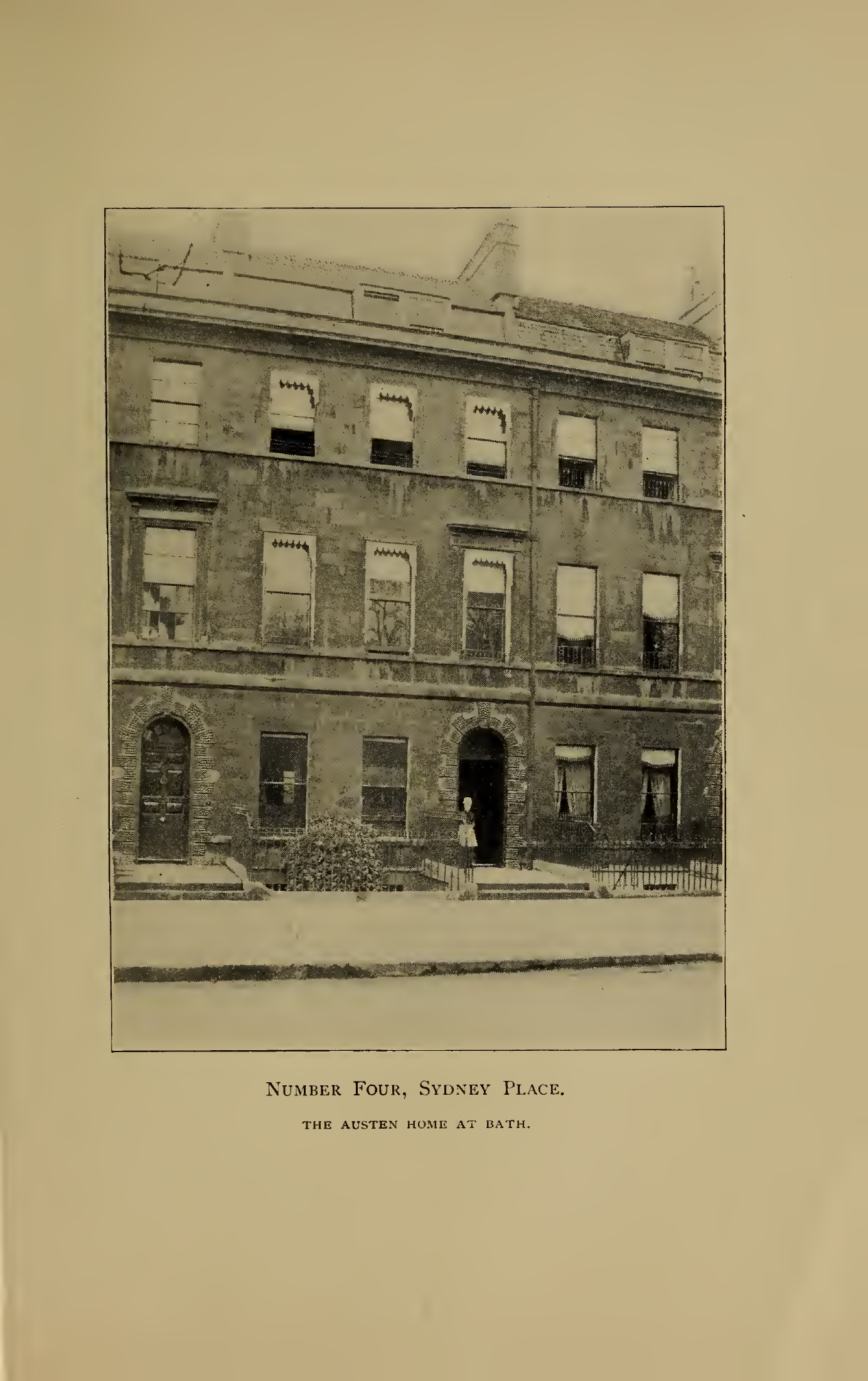
It is very easy to arrive at No. 4 thinking of Jane Austen the novelist; rather lovely, then, to meet the family who were simply making a home here. Between 1801 and 1804, Jane shared this house with her parents, George and Cassandra, and her sister, also Cassandra, with her first published novel still years away.1, 10
The details that survive are wonderfully domestic. There is the business of choosing a respectable house, a brother spending too much on presents, and a guidebook in which father and daughter each wrote their name. Even a frightening illness finds its way into the family’s humour, when Mrs Austen takes up her pen to give Death a piece of her mind.
A new neighbourhood.
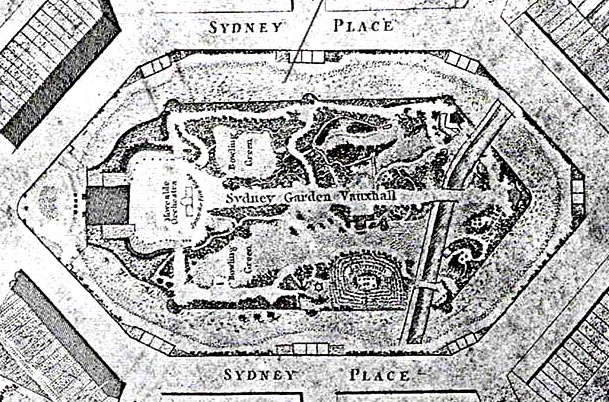
The honey-coloured terrace we now think of as historic Bath was almost new when the Austens arrived. Built between 1792 and 1796 to Thomas Baldwin’s designs, Nos. 1–12 Sydney Place belonged to the city’s growing Georgian neighbourhood, with all the promise of a new address.1
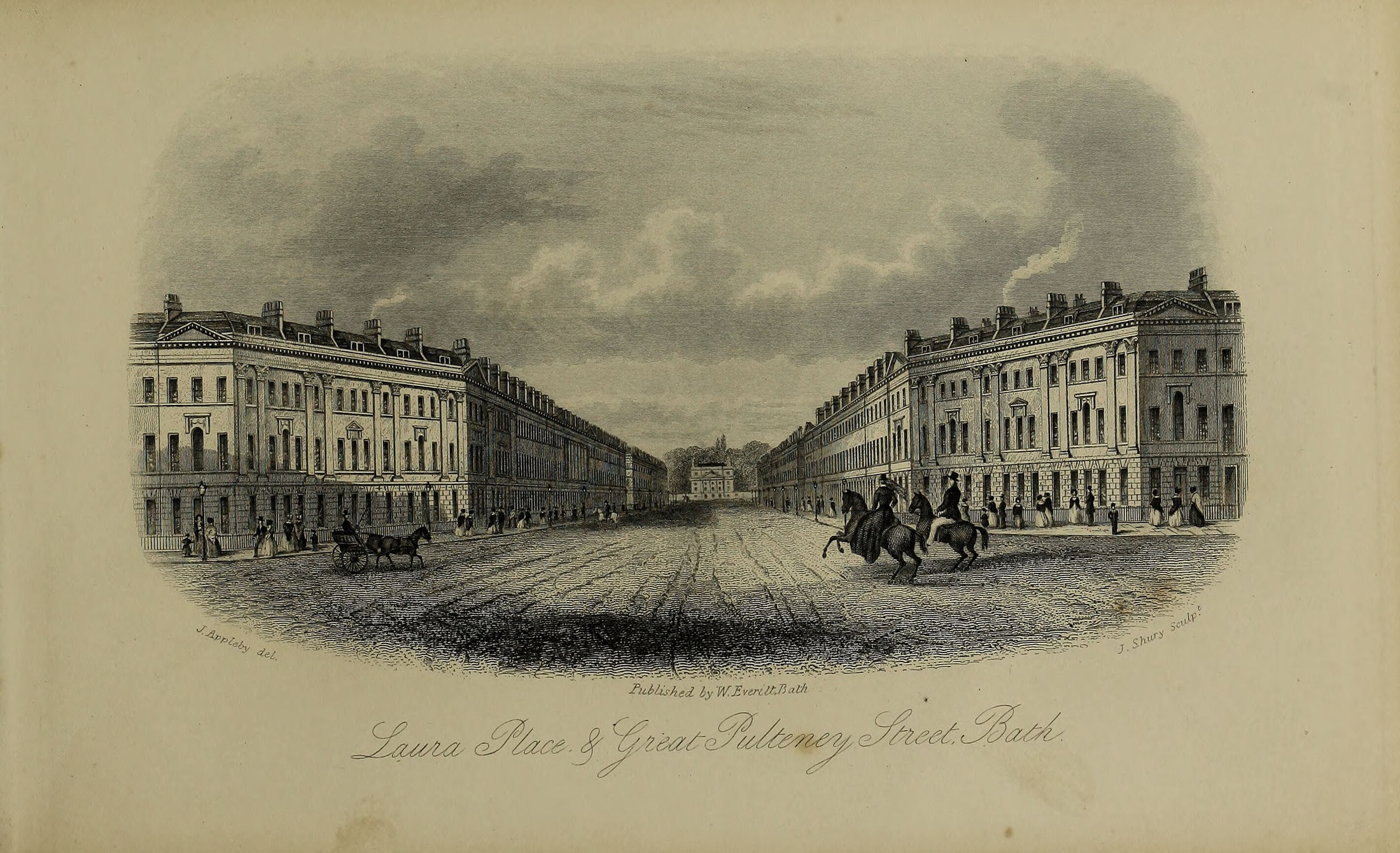
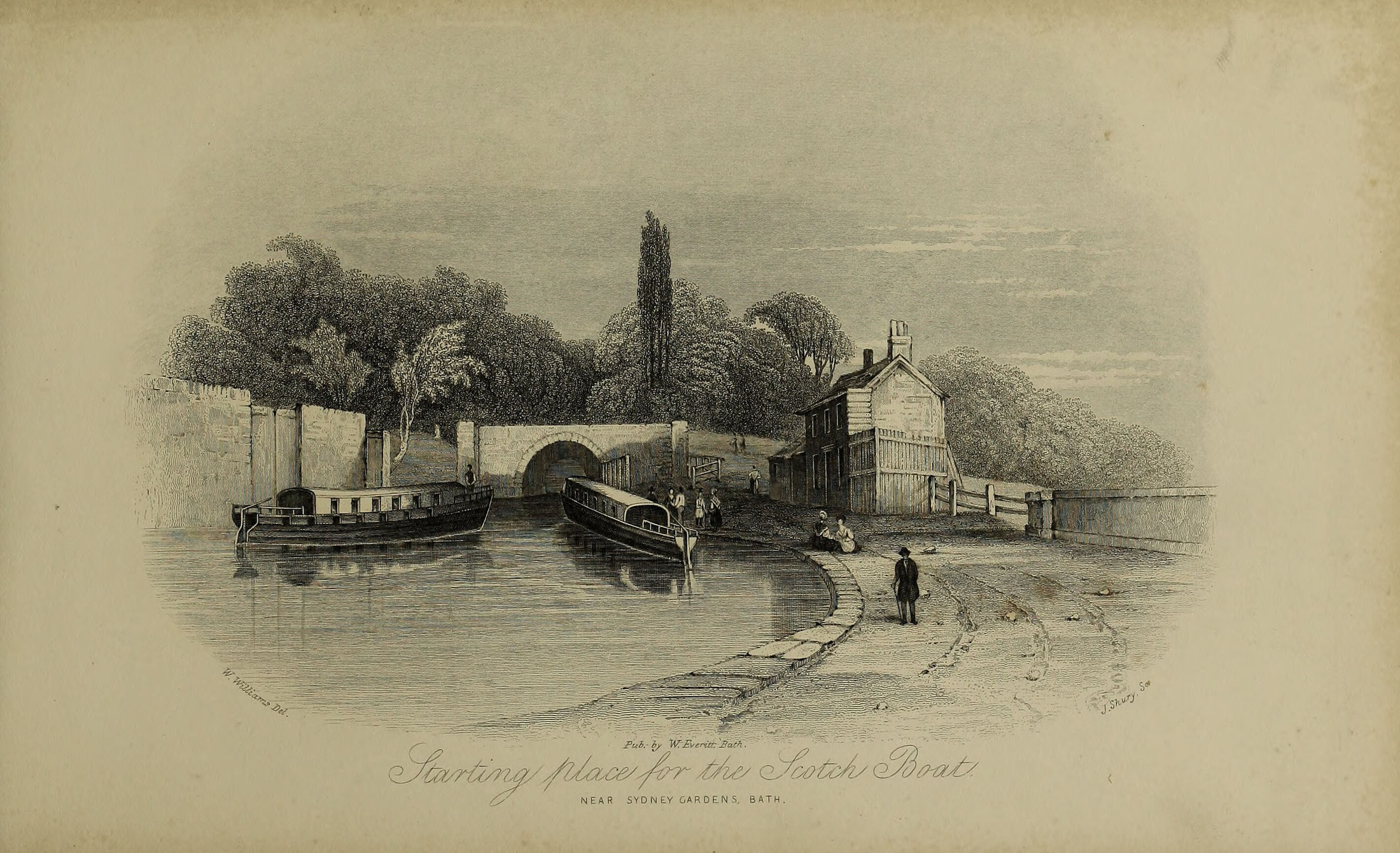
And what an address for a promenade. Sydney Gardens had opened in May 1795, offering paying visitors rather more than a turn among the trees: there were entertainments, evening gatherings and a labyrinth to lose yourself in. Jane, as we shall see, had her eye on that last attraction.2, 4
Fireworks, and somewhere
to escape the music.
Jane was already well acquainted with Bath’s pleasures by the time the family considered moving here. Visiting in 1799, she stayed in Queen Square and sent Cassandra news of shopping, outings and evenings at Sydney Gardens, taking an interest in the entertainment without feeling obliged to admire all of it.3
A concert, for instance, had the considerable advantage of taking place in gardens large enough to:
“get pretty well beyond the reach of its sound”
The fireworks at a later gala met with rather warmer approval:
“really beautiful, and surpassing my expectation”
Between the two remarks, you get a splendid sense of her company: quite ready to enjoy an evening out, and equally ready to be funny about it.
Life at No. 4
Finding a home.
When George Austen retired from his parish at Steventon, the family exchanged the Hampshire rectory for Bath. Before they could settle into their new life, however, there was a house to find, and Jane’s January letters are full of the practicalities familiar to anyone who has ever moved.10
Addresses were considered, furniture and books had to be dealt with, and everyone had their preferences. Her father wanted:
“a comfortable and a creditable-looking house”
Jane’s own argument for this end of town is rather more enticing:
“It would be very pleasant to be near Sydney Gardens; we might go into the labyrinth every day.”
By May, Jane and her mother were staying at the Paragon, where a letter of 26–27 May brings news of a particularly welcome extravagance. Their naval brother Charles had bought gold chains and topaz crosses for his sisters; Jane, evidently touched by his generosity, declared that “he must be well scolded”.5
By the autumn, the move was becoming a home. Writing to Phila Walter on 29 October, Eliza Austen reported that the family had returned from Devonshire and were “superintending the fitting up of their new house”.6
The work of a household
Even before the move, Jane had amused herself with the question of who would keep the new household running, writing to Cassandra from Steventon on 3 January of “a steady cook and a young giddy housemaid”.7 Down here in the former service rooms, that busy, domestic side of the house’s history feels particularly close.
A book with this address.
Of all the surviving connections to this house, a guidebook is perhaps the most quietly affecting. The family’s copy of Richard Warner’s Excursions from Bath, published in 1801 and now kept at Jane Austen’s House in Chawton, carries two very familiar names:
“Geo. Austen
4 Sydney Terrace
1802”
“J. Austen
Southampton
1807”
George’s inscription was later crossed out, and Jane added her own on the flyleaf. By 1807 it belonged to Jane in Southampton, still carrying her father’s Bath address.8
See the surviving book at Jane Austen’s HouseMeanwhile, Sydney Gardens was finding ever more ambitious ways to entertain its visitors. On 7 September 1802, Garnerin and Mr Glassford rose above the gardens in a balloon, which puts the usual afternoon promenade in the shade.9
Away from Bath, the end of the year brought a much more private turning point. Visiting Manydown in Hampshire, Jane accepted Harris Bigg-Wither’s proposal on 2 December, then withdrew her acceptance the following day.10, 11
Ten pounds, and no book.
In 1803, publication seemed a little closer. A manuscript called Susan, begun during Jane’s Steventon years and destined to become Northanger Abbey, was sold to the publisher Crosby for £10, through William Seymour acting for her brother Henry.12
And then, maddeningly, nothing happened. Crosby never published it, leaving Jane to record her bewilderment in the advertisement she later prepared for the novel:
“why the business proceeded no farther, the author has never been able to learn”
The wait would outlast the family’s time in this house by many years. Jane challenged Crosby in 1809, and Henry finally bought the manuscript back in 1816 for the same £10: a remarkably long detour for the novel that would give Catherine Morland her first intoxicating taste of Bath.12
A writer at work.
The unfinished Watsons, usually dated to around 1804, lets us look beyond the beautifully composed sentences of the published novels and see Jane doing the work: crossing things out, changing her mind and finding that the page was no longer quite big enough.10, 14
Her solution was wonderfully practical. Three surviving patches of paper, added for revisions, were once fastened to the manuscript with straight pins. The patches are now kept separately, but one of the pins survives alongside them; even Jane Austen needed a little more room for a better idea.14
A September visit to Lyme brought a change of scene, and a letter of 14 September full of bathing, dancing and walks on the Cobb.6 Towards the end of the year came another change, when the family left Sydney Place for No. 3 Green Park Buildings East. Jane’s Bath years continued, but the chapter at this address had drawn to a close.1
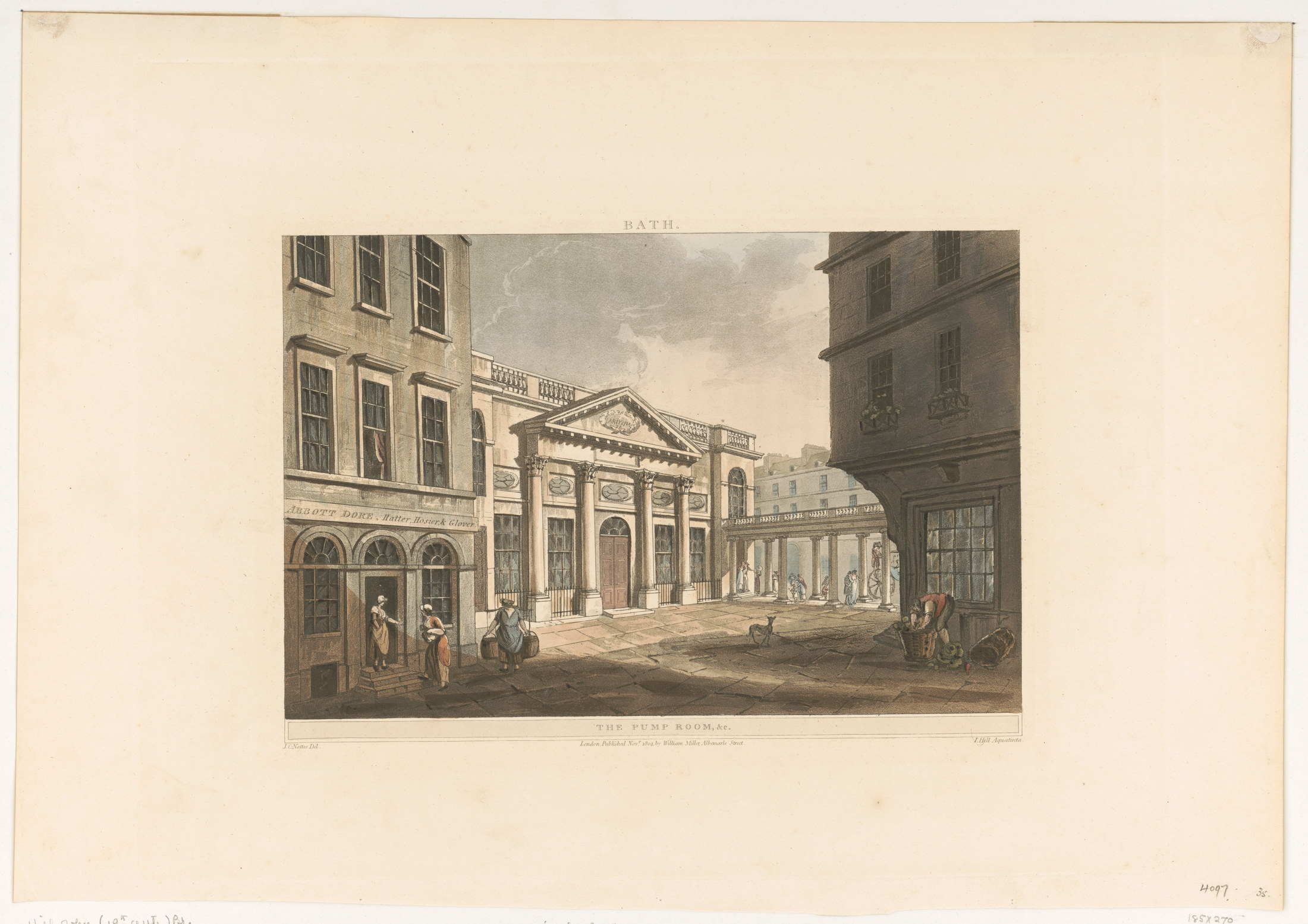
Library of Congress · Public domain ↗
After Sydney Place
A loss in the family.
George Austen died on 21 January 1805, shortly after the family’s move away from Sydney Place. As well as losing a husband and father, Mrs Austen and her daughters faced a much smaller income, and the wider family helped to support them.1, 10
Leaving Bath.
When Jane finally left Bath in July 1806, her feelings were some way from the pleasures of those early visits. Remembering the departure two years later, in a letter from Godmersham, she wrote:
“with what happy feelings of escape!”
By then, Bath held far more than memories of concerts and fireworks. It had been the place where the family made a new home, and where they lost George; there is room in those years for both the delight of arriving and the relief of moving on.
Bath on the page.
Bath returned in two very different novels. Northanger Abbey grew from the long-delayed Susan, while Persuasion was written at Chawton in 1815–1816, looking back towards the city from the distance of another home and another decade.12, 16
The two novels finally reached readers together in December 1817, after Jane’s death, with 1818 printed on their title pages.17
For the last word, though, we turn to Catherine Morland and her delighted question to Henry Tilney:
“Oh! Who can ever be tired of Bath?”
It is a feeling you may recognise after a few days here. A promenade, a book, and no particular hurry to leave.
Follow the story.
The letters are Jane’s, unless another writer is named. These editions, collection records and histories let you explore them for yourself.
The house at Sydney Place
Historic England, 1–12 Sydney Place: the terrace and the Austen family’s residence, 1801–1804.
Sydney Gardens
Historic England’s history of the pleasure gardens, opened in May 1795.
Jane’s letters, June 1799
Jane Austen to Cassandra Austen, 2 and 19 June 1799, Queen Square, Bath. Transcribed from Lord Brabourne’s 1884 edition.
Looking for a home
Jane Austen to Cassandra Austen, 14 and 21 January 1801, Steventon. Transcribed from Lord Brabourne’s 1884 edition.
Charles’s presents
Jane Austen to Cassandra Austen, 26–27 May 1801, the Paragon, Bath. Jane Austen’s House, CHWJA:JAHLTR2.
The family’s own accounts
William Austen-Leigh and Richard Arthur Austen-Leigh, Jane Austen, Her Life and Letters (1913), chapter XI: Eliza’s letter of 29 October 1801, Mrs Austen’s poem, and Jane’s letter from Lyme of 14 September 1804.
A cook and a housemaid
Jane Austen to Cassandra Austen, 3 January 1801, Steventon. The Letters of Jane Austen, edited by Sarah Chauncey Woolsey (1892).
A book belonging to George and Jane
Richard Warner, Excursions from Bath (1801). The signed family copy, Jane Austen’s House, CHWJA:JAHB46.
A balloon over the gardens
Hannah Myall, “The Pleasure Gardens in the Past”, Sydney Gardens Parks for People project, 26 May 2020; the ascent of 7 September 1802.
Dates in Austen’s life
Jane Austen’s House: retirement and the move to Bath, the brief engagement, The Watsons and George Austen’s death.
The proposal at Manydown
Hampshire Gardens Trust, Manydown Park: the Hampshire house where Jane accepted Harris Bigg-Wither’s proposal.
Susan becomes Northanger Abbey
Jane Austen’s House and Kathryn Sutherland’s edition of the fiction manuscripts: the early novel and its publishing history.
Northanger Abbey, in Austen’s words
The Advertisement by the Authoress, and Catherine Morland’s conversation with Henry Tilney in chapter 10.
The Watsons: paper, patches and a pin
Kathryn Sutherland, Jane Austen’s Fiction Manuscripts: A Digital Edition. “The Watsons” headnote, including its physical structure and revisions. Bodleian manuscript MS. Eng. e. 3764.
Remembering the departure
Jane Austen to Cassandra Austen, 30 June–1 July 1808, Godmersham. The “escape” remark occurs in the 1 July continuation.
Persuasion at Chawton
Jane Austen’s House: the writing of Persuasion in 1815–1816.
Published together, December 1817
First edition of Northanger Abbey and Persuasion, with 1818 on its title pages. Jane Austen’s House, CHWJA:JAHB13.5.1–4.